
Tree & Lawn Service
Tree and lawn service for webworms, grasshoppers, crickets, chinch bugs, grubworms, aphids, scale and chiggers.
Tree and lawn service for the pests that hit Hill Country yards: webworms, grasshoppers, crickets, chinch bugs, grubworms, aphids, scale and chiggers. Depending on the pest, we treat with a spray or with granules that are watered into the soil.
Tree spray for webworms
Fall webworms are the silky tents that show up at the ends of branches in late summer and fall, especially on pecans, which are common in yards around Burnet, Llano and Travis Counties. The caterpillars feed inside the tents and can strip leaves off whole limbs. Treating trees while the webs are still small keeps them from spreading through the tree.
Aphids and scale
Aphids are small, soft insects that cluster on new growth and suck sap from trees and shrubs. They leave a sticky honeydew that turns black with sooty mold and draws ants. Scale insects do the same from under a protective shell on bark and stems. Crape myrtle bark scale, common in Central Texas, shows up as white or gray crusty patches and blackened bark. Treating early in the season keeps both from weakening the plant.
Lawn spray for grasshoppers and crickets
Hill Country summers can bring heavy grasshopper years, especially when it is dry. Grasshoppers chew through gardens, landscape plants and young trees. Late summer and fall can also bring big numbers of field crickets. They are drawn to lights at night, gather against walls and doors, and get inside, where they chirp and leave a mess. Treating the lawn and the edges of the property cuts their numbers before they reach the house.
Chinch bugs and grubworms
Chinch bugs feed on St. Augustine grass in the hottest, driest part of summer. The damage starts as yellow patches in full sun, often near the driveway or sidewalk, that turn brown and do not green up with watering. Grubworms are the white, C-shaped larvae of June beetles. They eat grass roots in late summer and fall, so the turf turns brown and pulls up like loose carpet. Grubworms are treated with granules that are watered in to reach the roots, the same way we treat fire ants.
Chiggers
Chiggers live in tall grass, brush and the edges of wooded areas. They are almost too small to see, and their bites itch for days, usually around the ankles, waistband and behind the knees. Keeping the grass mowed and treating the areas where people and pets walk cuts them down.
Timing
These are seasonal problems, so timing matters. Call the office at (512) 756-6645 when you start seeing tents in the trees, brown patches in the lawn or grasshoppers in the yard, and we will get you scheduled.
Protecting your pets
Fire ants and chiggers bother pets in the yard as much as people. Ask the office how long to keep pets off the lawn after a treatment, especially after granules are watered in. Your dogs, cats and horses are part of the family. Let the office know about your pets when you schedule, and we will plan the treatment around them, including where they eat, sleep and play, and how long to keep them out of treated areas.
REQUEST SERVICE OR GET A FREE ESTIMATE
Please provide the following information and our office staff will call or text you back during business hours.
Questions about this
What are the silky tents in my pecan trees?
Those are usually fall webworms. The caterpillars build silk tents at the ends of branches in late summer and fall and eat the leaves inside. Treating early, while the tents are small, keeps them from spreading.
Why do crickets swarm my house in late summer?
Field crickets breed through the summer and are drawn to lights at night. In late summer and fall they gather against walls and doors and slip inside. Treating the lawn and perimeter cuts their numbers.
Can you spray for grasshoppers?
Yes. Lawn and landscape treatments cut grasshopper numbers, and they work best when started early, before the grasshoppers are full grown. Dry summers tend to bring the worst grasshopper years.
Why are there brown patches in my St. Augustine lawn?
In the heat of summer it is often chinch bugs, which start as yellow patches in full sun and turn brown. In late summer and fall, brown turf that pulls up like loose carpet usually means grubworms eating the roots. Call and we will take a look.
Do you use granules or spray?
Both. Fire ants and grubworms are treated with granules that are watered into the soil. Webworms, aphids, scale, grasshoppers and chiggers are usually treated with a spray.
Other things we do
Boat Dock & Boathouse Pest Control
Nuisance spiders, mosquitoes, midges and no-see-ums on your boat dock and boathouse, handled with a dock treatment or an automatic misting system.
Fire Ant Program
Three fire ant treatments through the year, on a schedule we keep for you.
General Pest Control
No Contracts - No Hidden Fees. Great service from people you can trust.
Automatic Spider Misting Systems
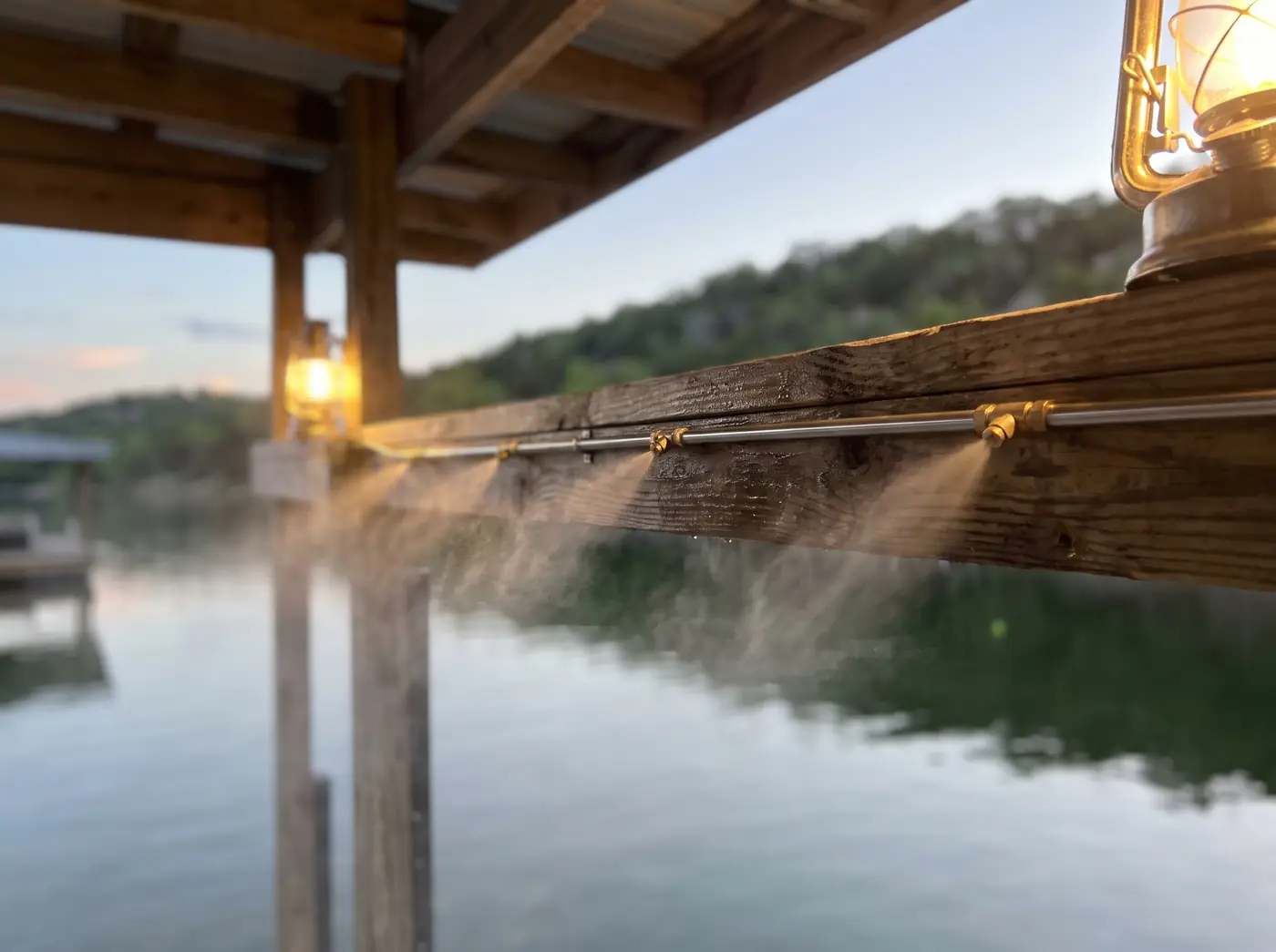
Programmable misting systems for your boat dock, lake house, deck, patio or porches.
Termites, WDI Reports & Pretreats
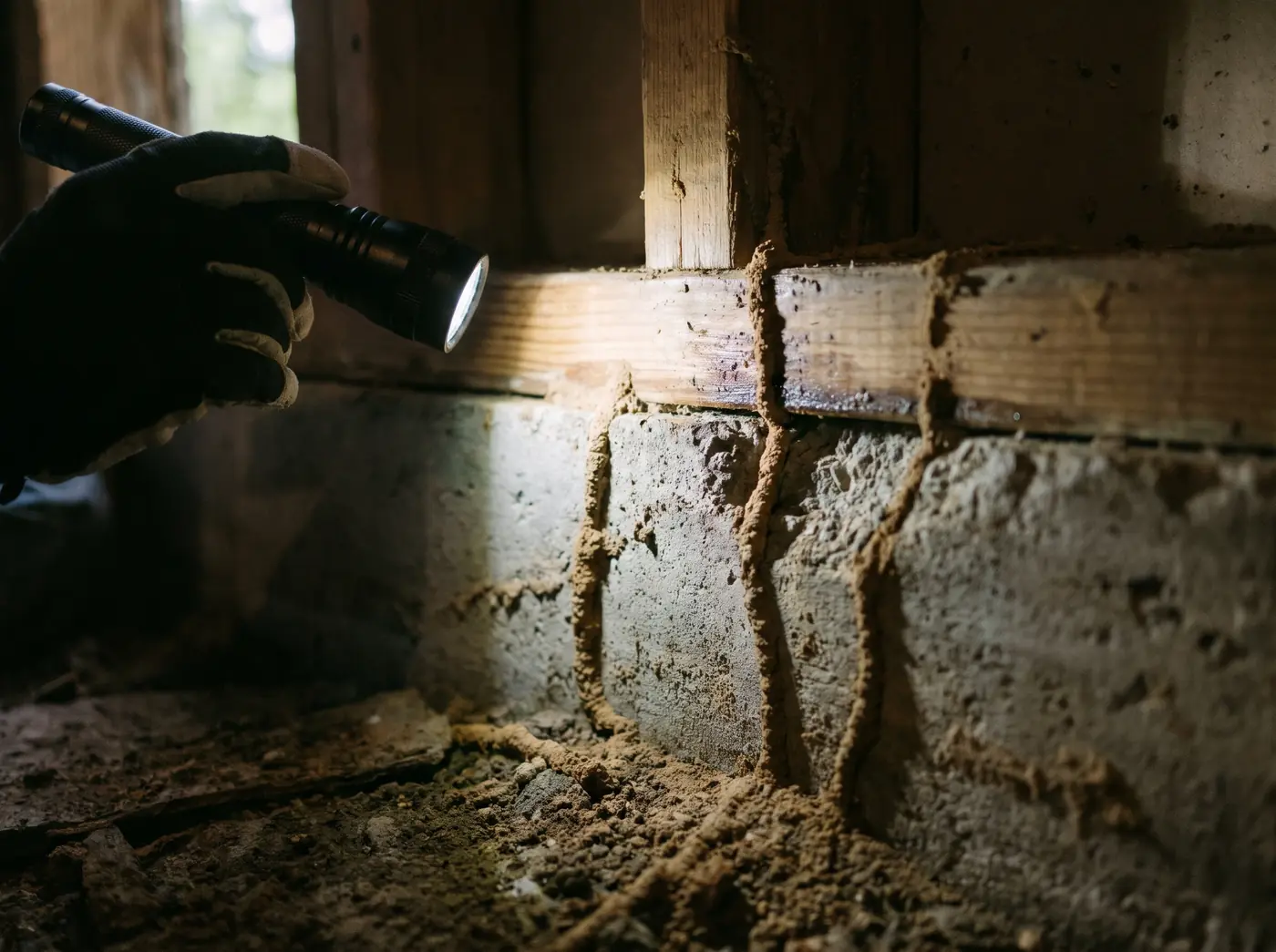
Inspections, treatment and pretreats. WDI reports for buyers, sellers and builders.
Termite Inspections
Official Texas WDI reports for home sales, and termite inspections for homeowners who want to know.

Ant Control
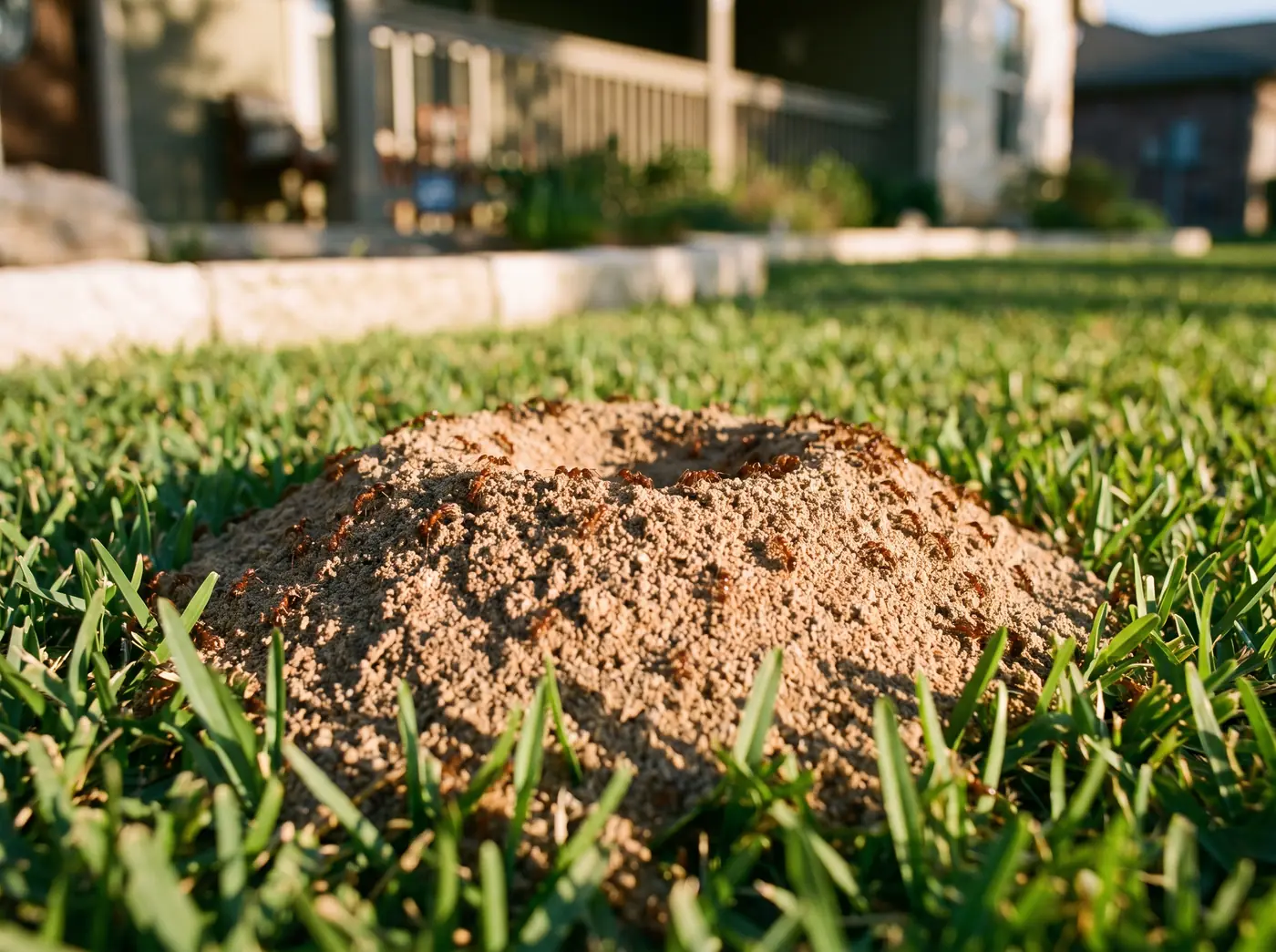
Fire ants in the yard, sugar ants in the kitchen, carpenter ants in the wood. Different ants need different treatments.
Flea & Tick Control
Deer, brush and tall grass bring ticks right up to Hill Country yards. Fleas ride in on pets and wildlife.
Mosquito Control
Lake coves, low spots and anything that holds water. Cut down where mosquitoes breed and where they rest.
Roach Control
Big American cockroaches that wander in from outside and small German roaches that breed indoors need different plans.
Rodent Control
Roof rats in the attic, mice in the garage, pack rats in the shed. Find how they get in and close it off.
Scorpion Control
Striped bark scorpions climb walls and hide in attics and rock. We treat where they live, not just where you saw one.
Spider Control
Docks, porches, eaves and garages: we control spider activity where lake country spiders actually live.
Wasp & Hornet Control
Hornets, bees, wasps and yellow jackets. Nests under eaves, dock roofs and in the ground, handled safely.
Call the office
A real person at the office(512) 756-6645Office hours
| Monday-Friday | 8am-5pm |
| Saturday & Sunday | Closed |
Please give 24 hours’ notice to change an appointment.
Address
1701 County Road 200B, Burnet, TX 78611