A tri-annual program: three fire ant treatments through the year, on a schedule we keep for you.
Fire ants in Hill Country yards
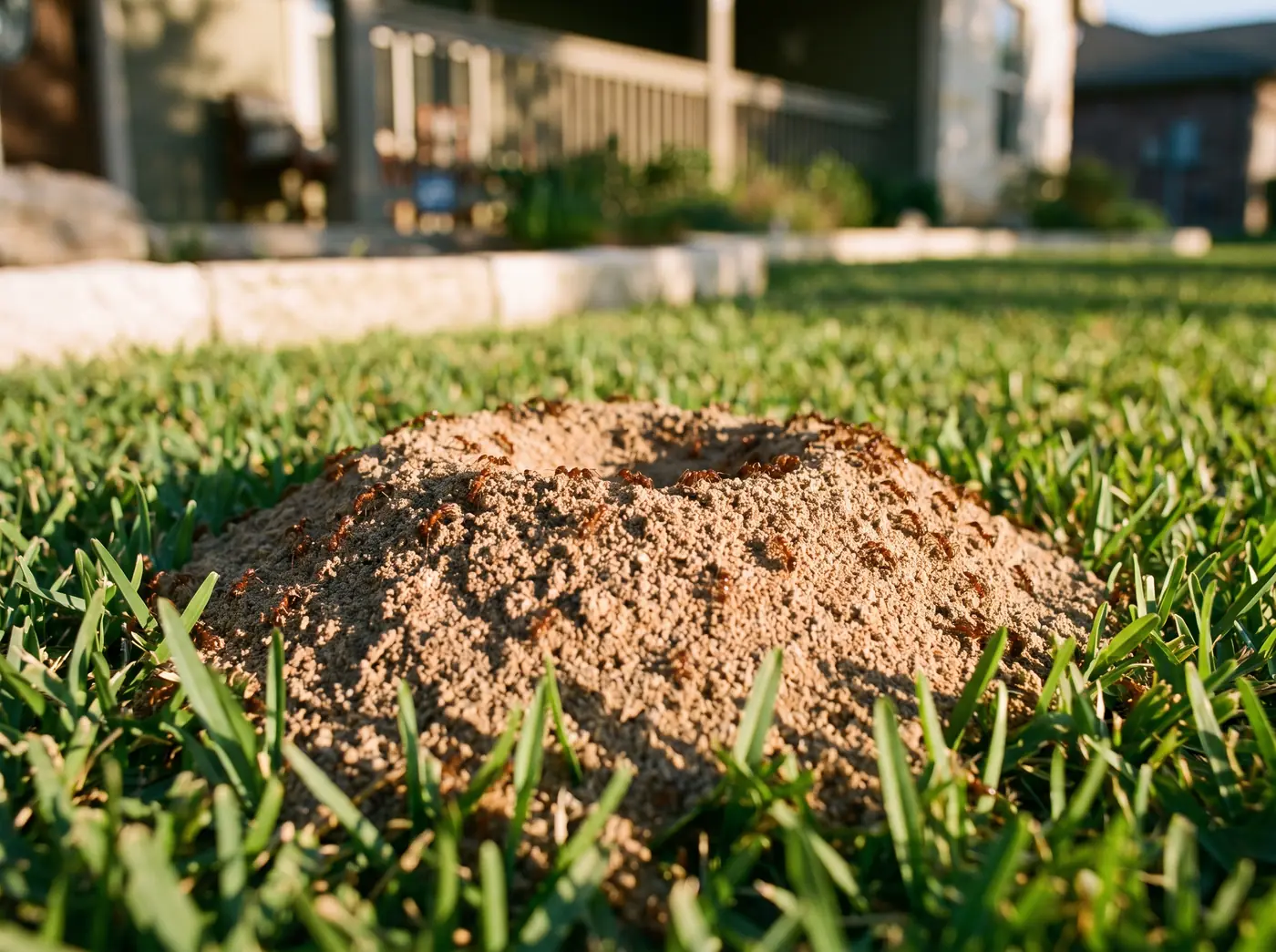
Red imported fire ants are the mound builders that take over lawns, pastures, fence lines and the edges of driveways all over Central Texas. A mound can hold a huge colony, and when it is disturbed, the workers pour out and sting at once. They are rough on children, pets, livestock and anyone working in the yard. They also like to move into electrical boxes, AC units and pump housings, where they can cause shorts and damage.
Fire ants are worst after rain. When the ground is wet, mounds pop up overnight as the colony moves soil to the surface. In hot, dry weather they go deeper and seem to disappear, but they are still there.
Why one treatment is not enough
Treating a single mound you can see usually just pushes the colony a few feet away, where it builds a new mound. And for every mound you can see, there are often colonies you cannot. Texas A&M AgriLife recommends the "Texas Two-Step." First, broadcast a bait across the whole yard. Then treat individual mounds that are a problem. Baits take time, often weeks, to work through the colony, and they need to be put out when ants are actively feeding.
How our program works
That is why we run fire ants as a program, not a one-time treatment:
- Three treatments through the year, timed to when fire ants are out foraging and the weather will let the bait work.
- Granular bait spread across the yard so the workers carry it back and the colony and queen are reached.
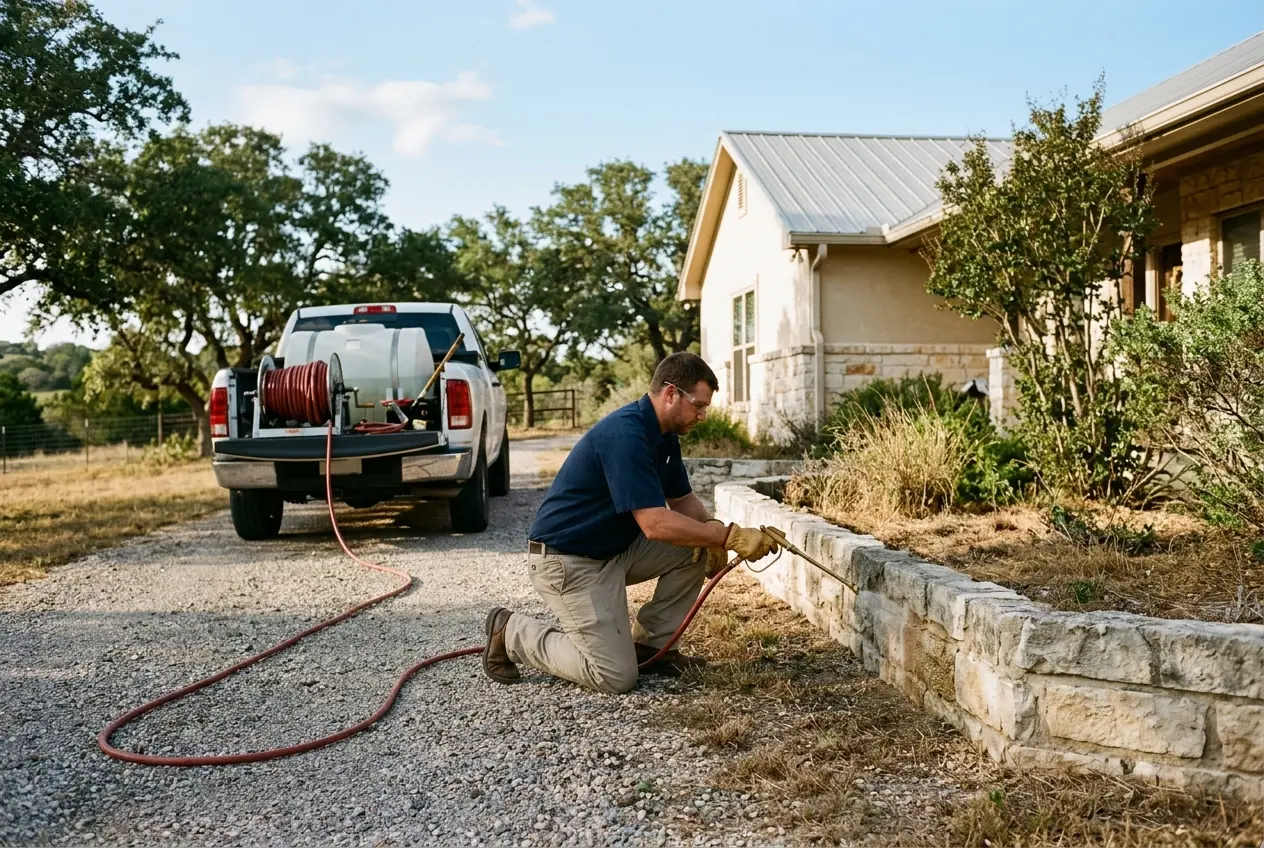
- Problem mounds near walkways, play areas, gates and equipment treated directly.
- We keep the schedule and call you, so you do not have to remember.
This approach works well for big Hill Country lots and acreage, where treating mound by mound would never keep up.
Getting the most out of it
- Do not disturb or rake mounds right after a treatment. Let the ants carry the bait home.
- Bait works best when the ground is dry and no rain is expected for a day or two, so tell us if you have sprinklers running.
- Keep an eye on electrical boxes, AC pads and well houses, and let us know if ants move in.
Protecting your pets
Fire ants are hard on dogs, cats, horses and livestock that step into or lie down on a mound, and on puppies and older pets that cannot move away quickly. A yard on the program is a safer yard for them to run in. Your dogs, cats and horses are part of the family. Let the office know about your pets when you schedule, and we will plan the treatment around them, including where they eat, sleep and play, and how long to keep them out of treated areas.
Call the office at (512) 756-6645 to get on the fire ant schedule.
REQUEST SERVICE OR GET A FREE ESTIMATE
Please provide the following information and our office staff will call or text you back during business hours.
Questions about this
Why does my yard fill up with fire ant mounds after it rains?
Wet soil lets the colony build up and move dirt to the surface, so mounds that were hidden underground show up overnight. The ants were already there; the rain just makes them visible.
What is the Texas Two-Step?
It is the method Texas A&M AgriLife recommends: spread a fire ant bait across the whole yard first, then treat individual problem mounds. Our program is built around the same idea, repeated through the year.
How long does fire ant bait take to work?
Usually a few weeks. The workers carry the bait back and share it through the colony, including the queen. It is slower than a contact spray but reaches the colony instead of just the top of the mound.
Why three treatments a year?
New colonies keep moving in from surrounding land, and a single treatment wears off. Three treatments timed to when fire ants are feeding keep the yard under control all season.
Can fire ants damage my AC unit or electrical boxes?
Yes. Fire ants are drawn to electrical fields and often pack into AC units, pump housings and outdoor boxes, where they can cause shorts. Let us know if you see them there.
Other things we do
Boat Dock & Boathouse Pest Control
Nuisance spiders, mosquitoes, midges and no-see-ums on your boat dock and boathouse, handled with a dock treatment or an automatic misting system.
General Pest Control
No Contracts - No Hidden Fees. Great service from people you can trust.
Automatic Spider Misting Systems
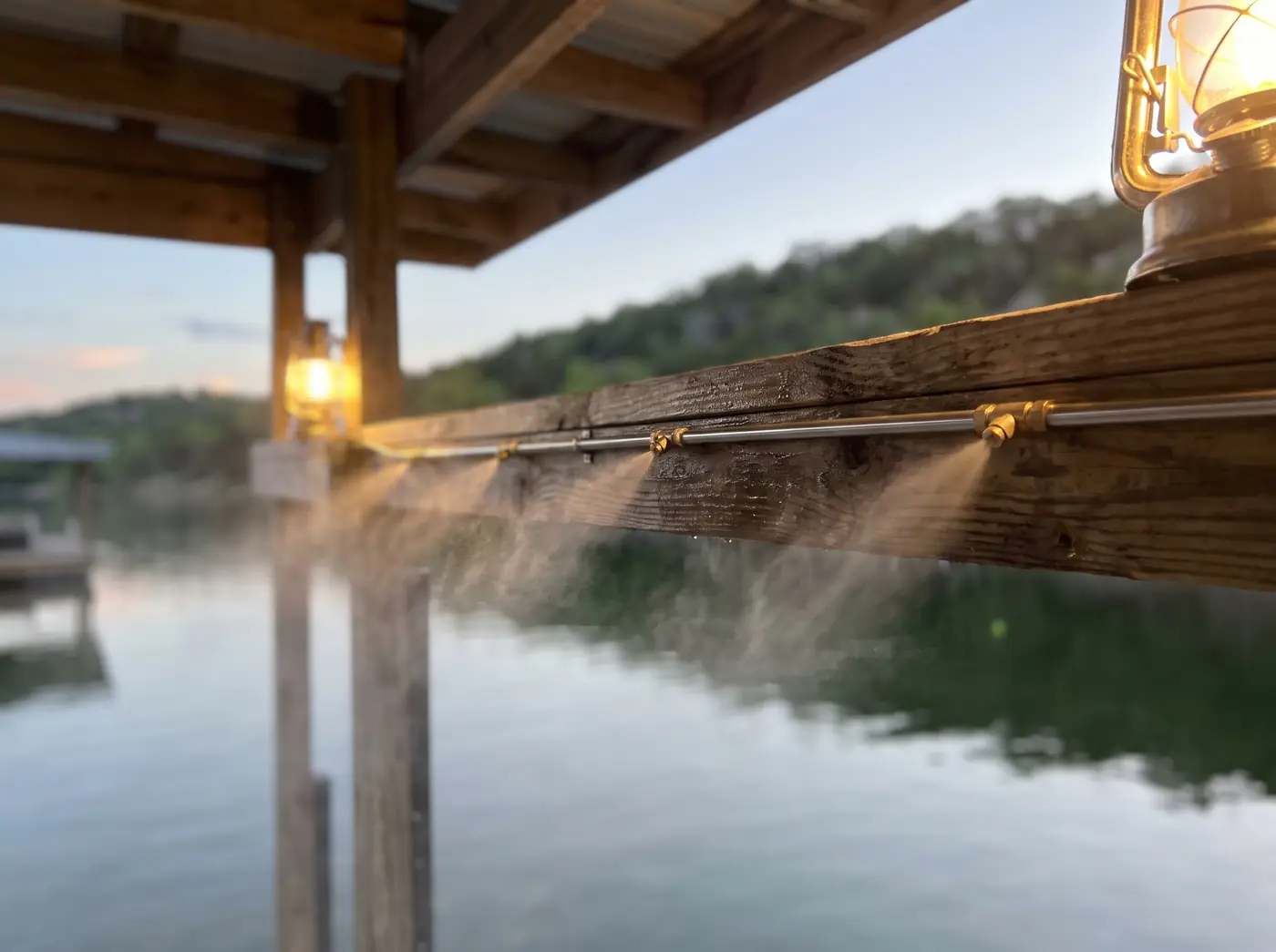
Programmable misting systems for your boat dock, lake house, deck, patio or porches.
Termites, WDI Reports & Pretreats
Inspections, treatment and pretreats. WDI reports for buyers, sellers and builders.
Termite Inspections
Official Texas WDI reports for home sales, and termite inspections for homeowners who want to know.
Tree & Lawn Service
Tree and lawn service for webworms, grasshoppers, crickets, chinch bugs, grubworms, aphids, scale and chiggers.


Ant Control
Fire ants in the yard, sugar ants in the kitchen, carpenter ants in the wood. Different ants need different treatments.
Flea & Tick Control
Deer, brush and tall grass bring ticks right up to Hill Country yards. Fleas ride in on pets and wildlife.
Mosquito Control
Lake coves, low spots and anything that holds water. Cut down where mosquitoes breed and where they rest.
Roach Control
Big American cockroaches that wander in from outside and small German roaches that breed indoors need different plans.
Rodent Control
Roof rats in the attic, mice in the garage, pack rats in the shed. Find how they get in and close it off.
Scorpion Control
Striped bark scorpions climb walls and hide in attics and rock. We treat where they live, not just where you saw one.
Spider Control
Docks, porches, eaves and garages: we control spider activity where lake country spiders actually live.
Wasp & Hornet Control
Hornets, bees, wasps and yellow jackets. Nests under eaves, dock roofs and in the ground, handled safely.
Call the office
A real person at the office(512) 756-6645Office hours
| Monday-Friday | 8am-5pm |
| Saturday & Sunday | Closed |
Please give 24 hours’ notice to change an appointment.
Address
1701 County Road 200B, Burnet, TX 78611