
Rodent Control
Roof rats in the attic, mice in the garage, pack rats in the shed. Find how they get in and close it off.
Scratching in the attic at night, droppings in the garage, a chewed bag of dog food. Rodents are one of the most unsettling pests to find, and around the Highland Lakes they have plenty of ways in.
The rodents we see around Burnet, Llano and Travis Counties
- Roof rats. Slim, dark rats with long tails that are excellent climbers. Texas A&M AgriLife notes that roof rats seldom burrow and usually nest in attics and double walls. If the noise is coming from above you, it is most likely a roof rat. They travel along tree limbs, fences, power lines and vines to reach the roof.
- House mice. Small, gray-brown mice that get into kitchens, pantries, garages and storage areas.
- Deer mice and other native mice. Common in rural and lakefront properties, sheds, barns and cabins. Deer mice can carry hantavirus, so their droppings and nests should never be swept up dry.
- Pack rats (woodrats). Native rats that build big nests of sticks, cactus and debris in brush, under sheds and in the engine compartments of vehicles and boats that sit.
Why rodents move in
Rodents want food, water and shelter, and Hill Country properties offer all three:
- Pecan and oak trees that drop nuts, and fruit trees.
- Bird feeders, deer feeders, pet food and livestock feed.
- Boats, RVs and vehicles that sit in storage, plus sheds and lake cabins that are closed up for weeks at a time.
- Trees and vines that touch the roof, giving roof rats a highway to the attic.
Rodent pressure usually rises in the fall as nights cool down and they look for shelter. A mouse can squeeze through a gap about the size of a dime, and a rat through one the size of a quarter.
How rodent control works
Traps and baits alone only remove the rodents that are already inside. If the way in stays open, new ones replace them. Real rodent control means:
- Inspecting to find how they are getting in, such as roof lines, soffits, AC lines, garage door corners, foundation vents and pipe openings.
- Removing the rodents that are inside.
- Closing up the entry points and cutting back the trees and vines they use to get there.
- Cutting off food, like feeders and stored feed, close to the house.
Circle S handles rodent problems in homes, garages, sheds and lake houses around Burnet, Llano and Travis Counties and the Highland Lakes. Call the office and tell us what you are hearing or finding.
What you can do
- Trim tree limbs back at least a few feet from the roof.
- Store pet food, bird seed and feed in metal or heavy plastic containers with lids.
- Pick up fallen pecans and fruit.
- Check stored boats, RVs and vehicles regularly. Open the hood and look for nests.
- When cleaning up droppings, wet them down with a disinfectant first and wear gloves. Do not sweep or vacuum them dry.
Call Circle S at (512) 756-6645.
Protecting your pets
Rats and mice get into pet food and feed, and the fleas and droppings they leave behind are no good for pets. Your dogs, cats and horses are part of the family. Let the office know about your pets when you schedule, and we will plan the treatment around them, including where they eat, sleep and play, and how long to keep them out of treated areas.
REQUEST SERVICE OR GET A FREE ESTIMATE
Please provide the following information and our office staff will call or text you back during business hours.
Questions about this
How do I know if I have rats or mice in the attic?
Noises at night in the attic or ceiling usually mean roof rats, which are climbers that nest up high. Mice are more often found in kitchens, pantries and garages. Droppings help tell them apart: rat droppings are larger, about half an inch long.
How small a hole can a mouse get through?
About the size of a dime. A rat needs a gap about the size of a quarter. Gaps around AC lines, pipes, garage door corners and soffits are the usual ways in.
Is trapping enough on its own?
No. Trapping removes the rodents already inside, but if the entry points stay open, new ones move in. Sealing the ways in is what keeps them out.
Are mouse droppings dangerous to clean up?
Droppings from deer mice can carry hantavirus. Do not sweep or vacuum them dry. Wet them down with a disinfectant, wear gloves, and wipe them up.
Why do rodents get into boats and cars that sit?
A parked boat, RV or car is quiet, sheltered and dry. Pack rats and mice build nests in engine compartments and chew wiring. Check stored vehicles often, especially lake boats over the winter.
Other things we do
Boat Dock & Boathouse Pest Control
Nuisance spiders, mosquitoes, midges and no-see-ums on your boat dock and boathouse, handled with a dock treatment or an automatic misting system.
Fire Ant Program
Three fire ant treatments through the year, on a schedule we keep for you.
General Pest Control
No Contracts - No Hidden Fees. Great service from people you can trust.
Automatic Spider Misting Systems
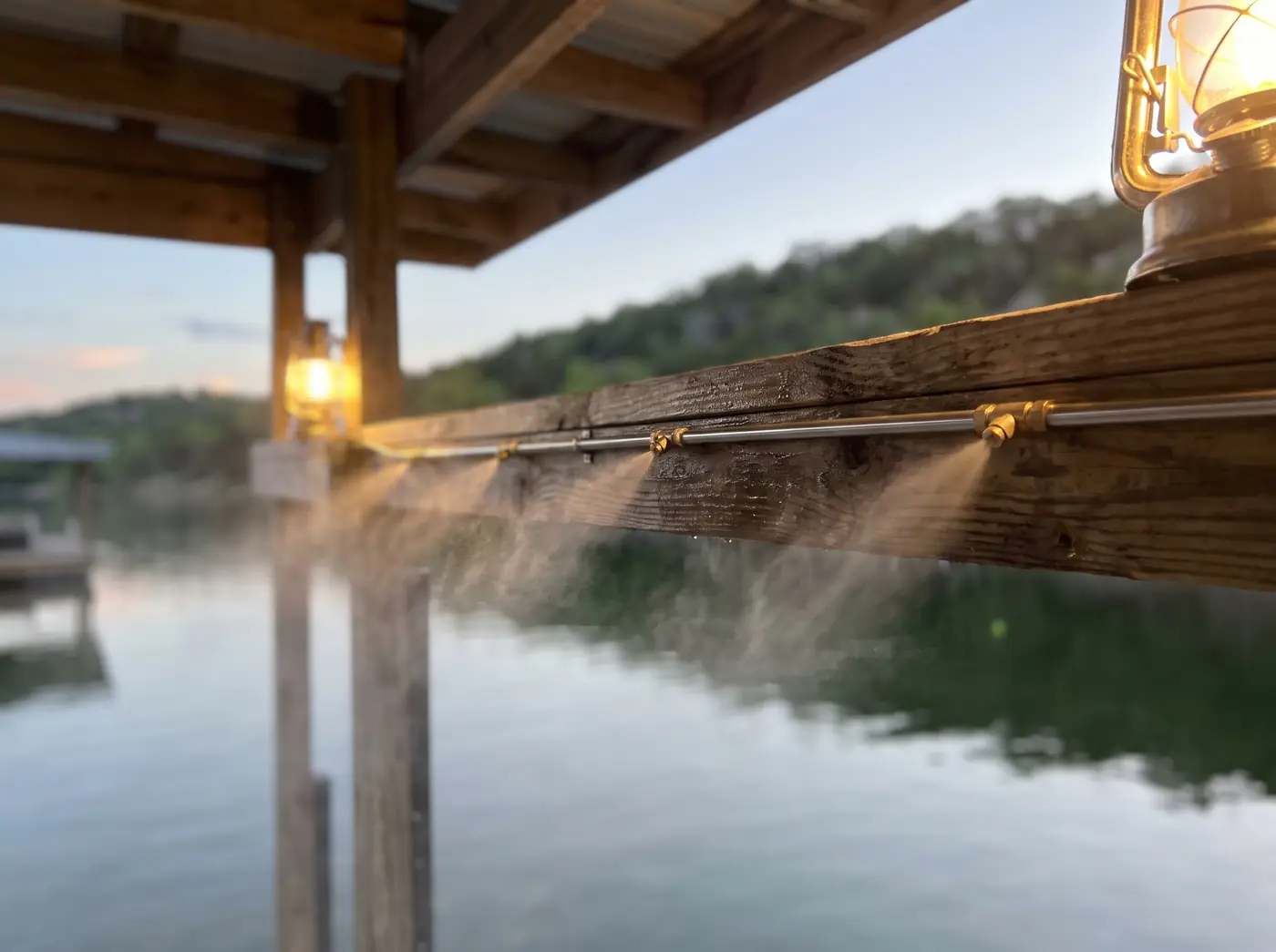
Programmable misting systems for your boat dock, lake house, deck, patio or porches.
Termites, WDI Reports & Pretreats
Inspections, treatment and pretreats. WDI reports for buyers, sellers and builders.
Termite Inspections
Official Texas WDI reports for home sales, and termite inspections for homeowners who want to know.
Tree & Lawn Service
Tree and lawn service for webworms, grasshoppers, crickets, chinch bugs, grubworms, aphids, scale and chiggers.

Ant Control
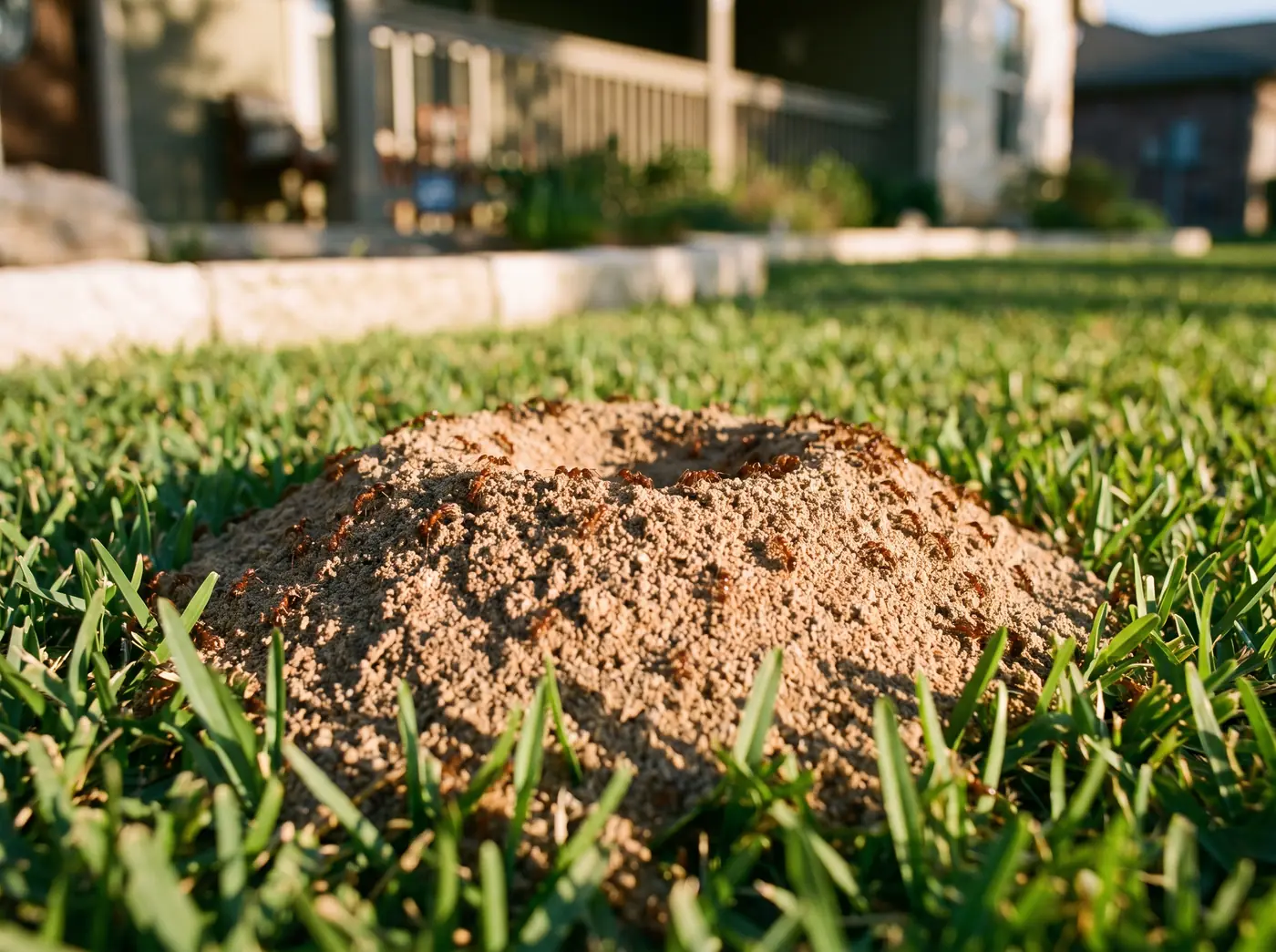
Fire ants in the yard, sugar ants in the kitchen, carpenter ants in the wood. Different ants need different treatments.
Flea & Tick Control
Deer, brush and tall grass bring ticks right up to Hill Country yards. Fleas ride in on pets and wildlife.
Mosquito Control
Lake coves, low spots and anything that holds water. Cut down where mosquitoes breed and where they rest.
Roach Control
Big American cockroaches that wander in from outside and small German roaches that breed indoors need different plans.
Scorpion Control
Striped bark scorpions climb walls and hide in attics and rock. We treat where they live, not just where you saw one.
Spider Control
Docks, porches, eaves and garages: we control spider activity where lake country spiders actually live.
Wasp & Hornet Control
Hornets, bees, wasps and yellow jackets. Nests under eaves, dock roofs and in the ground, handled safely.
Call the office
A real person at the office(512) 756-6645Office hours
| Monday-Friday | 8am-5pm |
| Saturday & Sunday | Closed |
Please give 24 hours’ notice to change an appointment.
Address
1701 County Road 200B, Burnet, TX 78611